Could Crowd-Powered Logistics Make Deliveries Cheaper for Edmonton Businesses?
Edmonton businesses pay too much for local delivery. Crowd-powered logistics could change that by sharing unused vehicle capacity and replacing fixed fleet costs with flexible, per-trip pricing.
For small and medium businesses in Edmonton, delivery is one of those costs that keeps growing without offering much in return. A restaurant on Whyte Avenue, a boutique in Old Strathcona, a parts supplier in Nisku — all of them rely on getting products into customers' hands, and all of them are squeezed by the price of doing it.
Traditional courier models charge based on fixed fleet costs, driver wages, fuel, insurance, and warehouse overhead. Whether the truck is full or half-empty, those costs stay the same. That rigidity is passed straight to the business owner, often making local delivery feel like a luxury instead of a basic service.
Why delivery is so expensive right now
The old model requires companies to predict demand in advance. If they overestimate, they pay for idle drivers and empty miles. If they underestimate, deliveries are late, customers complain, and revenue walks away. Edmonton winters and long suburban distances make that balancing act even harder.
Then there is the coverage problem. A business in Leduc or Sherwood Park may find same-day delivery unavailable or prohibitively expensive because couriers route everything through a central depot. The further a customer lives from that depot, the more they — or the business — has to pay.
How crowd-powered logistics changes the math
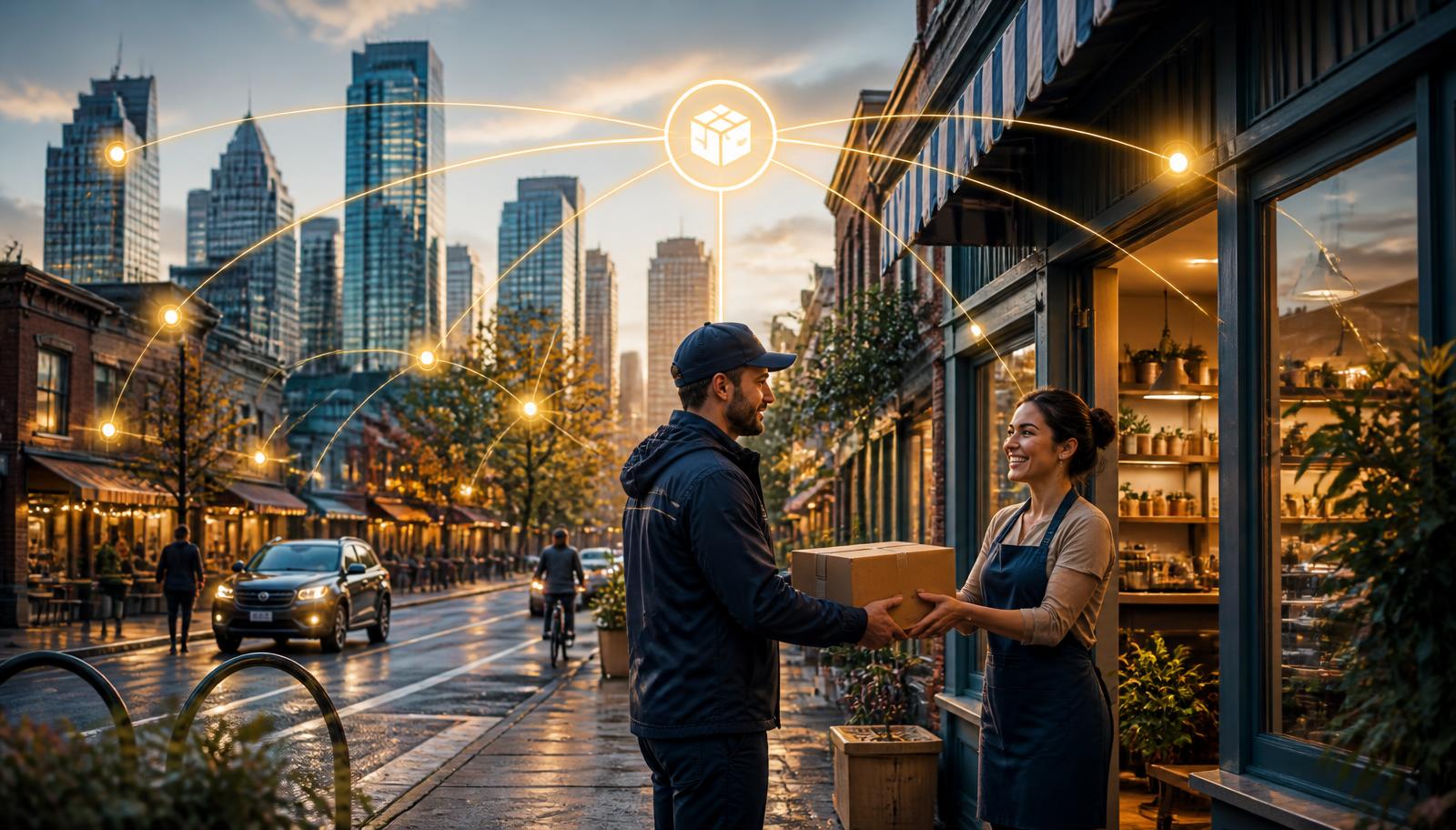
Crowd-powered logistics replaces fixed fleets with a flexible network of drivers already on the road. Instead of dispatching a dedicated truck, the platform finds someone already heading toward the destination. The cost drops because the driver is earning extra income on a trip they were taking anyway.
For businesses, this means per-trip pricing without the burden of minimum volumes, long-term contracts, or fleet maintenance. A baker with six cake deliveries today and two tomorrow is not punished for inconsistency. They pay for movement, not machinery.
Real savings, real flexibility
The savings come from better utilization. Empty seats in cars, unused cargo space in vans, and return trips with nothing on board all become available capacity. An algorithm matches each parcel to the right driver based on route, timing, vehicle size, and reliability.
The result is faster pickups, wider delivery zones, and a cost structure that scales with demand. During quiet periods, pricing stays low because the network is made of independent participants. During busy periods, more drivers can join temporarily because there are no fixed shifts or hiring bottlenecks.
What it means for Edmonton
Edmonton is the perfect proving ground. A sprawling city with distinct commercial pockets, harsh seasonal demand spikes, and a population that already drives everywhere. If crowd-powered logistics can make delivery cheaper here, the lessons apply to Calgary, Winnipeg, and beyond.
LogiX Canada is building that model from Edmonton outward. For local businesses, the question is no longer whether they can afford to deliver. It is whether they can afford to keep doing it the old way.