
The Cross-Border Future: Canada ⇄ Nigeria, With Clearer Coordination
Customs, currencies, and compliance used to make international logistics painful. Modern platforms are quietly making borders feel optional.
Move a parcel from Toronto to Manchester and it will pass through at least four regulatory regimes, two currencies, three carriers, and a customs broker who has probably never met any of the other parties involved. The miracle is not that it sometimes goes wrong. It is that it usually does not.
We built LX Mobility to make that miracle the default, not the exception.
Three live markets; regional requirements
LogiX is live in Canada, Nigeria and the United States. Verification, taxes and provider terms are regional; do not assume an account grants operating permission across borders. LogiX UK is paused until its planned return in 2027.
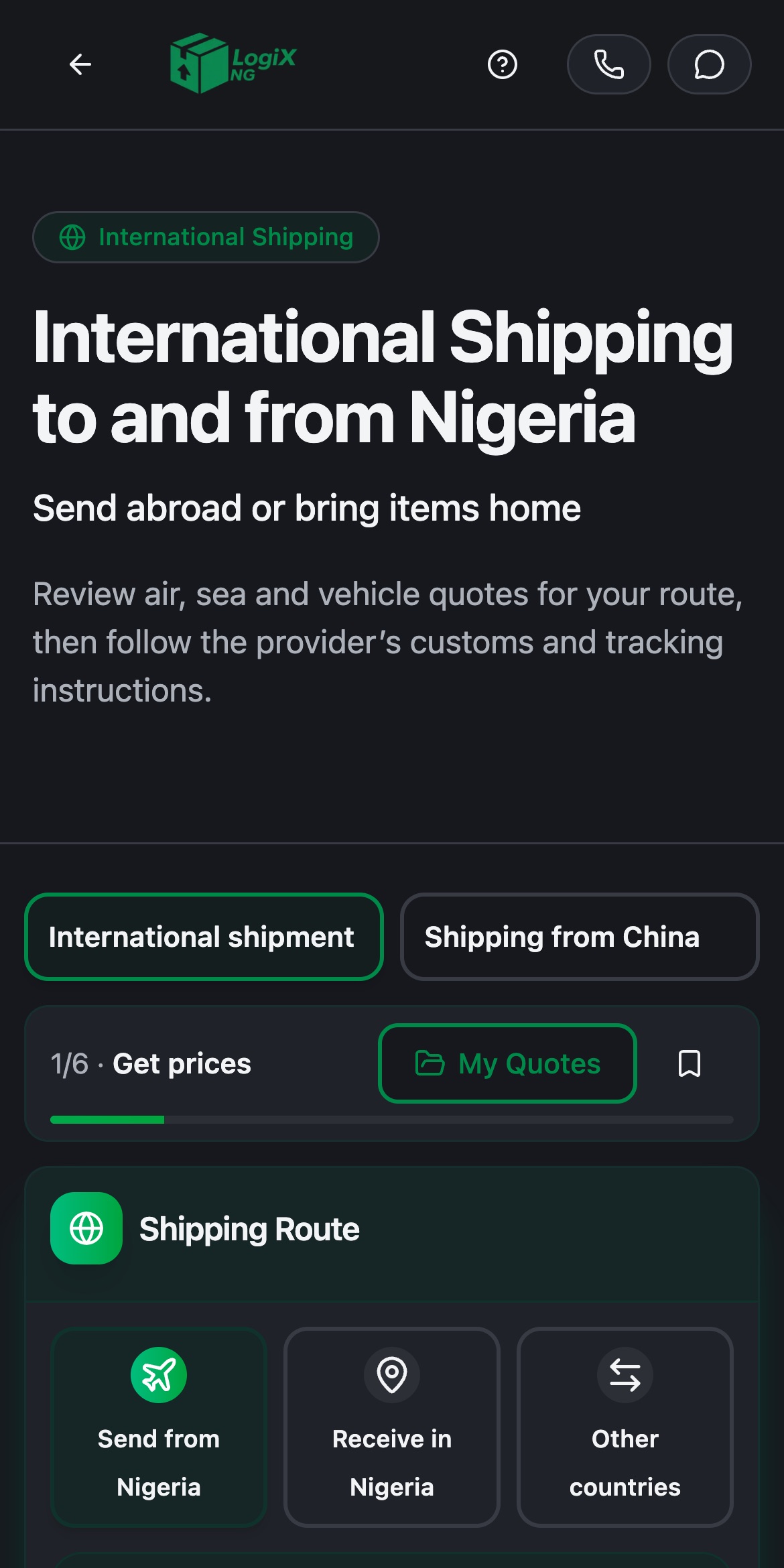
International shipping currently connects Canada and Nigeria both ways by air, sea and vehicle, plus express courier rates. Check customs requirements and charges for the specific shipment.
Customs, the boring superpower
Most logistics startups avoid customs because it is hard, slow, and unglamorous. We leaned in. Senders and providers must confirm required declarations, documentation and customs charges before shipping. Platform tools do not replace customs or airline requirements.
Clearance timing depends on customs, the provider and the shipment; no clearance-time guarantee is implied.
Why this matters
Small businesses in Lagos, Edmonton, Manchester, and Houston should be able to sell to each other as easily as they sell down the street. Logistics has been the bottleneck for a generation. We do not think it has to be.
If you are building, shipping, or moving anything across borders, we would love to hear from you. The next chapter of global trade is being written in software.